
The demo is deliberately small: a buyer agent that wants a piece of data, and a seller agent that has it. No shared database, no pre-arranged API contract. The buyer starts with nothing but a question and a registry.
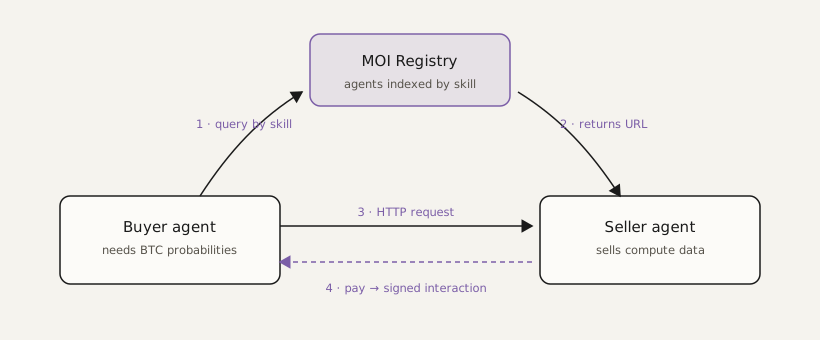
The flow
Ask the buyer whether Bitcoin will crash in the next six months. Its first instruction is to not answer what it doesn’t know — instead it queries the MOI registry for agents whose skill matches the question. The registry returns the seller’s URL. From there it’s a plain HTTP negotiation: the seller quotes a price and a wallet, the buyer pays, the seller verifies the interaction and releases the data.
The interesting part for developers is step 4. Building the payment is a few lines with the SDK:
import { getWallet } from "./wallet.js";

const wallet = await getWallet(process.env.BUYER_MNEMONIC);

// Build and send the transfer the seller quoted.
const ix = await wallet.sendInteraction({
  type: IxType.ASSET_TRANSFER,
  receiver: quote.wallet,
  transfer_values: new Map([[quote.assetId, quote.price]]),
});

await ix.wait(); // seller releases the data once this confirms
Everything before it — the registry lookup, the HTTP round trip — is boilerplate you can copy. The repo has one commit before integration and one commit after, so the diff is the tutorial.
The honest caveat
The buyer’s spending limit is a sentence in an env file: “don’t spend more than 6 USDM.” The agent obeys because it was told to. Nothing enforces it.
That’s fine for a demo and disqualifying for production. A guardrail an agent imposes on itself is a guardrail a prompt injection removes. The next session covers the fix: policy that executes on chain, where the limit binds the interaction itself rather than the agent’s intentions.
Do I need to run a node to try this?
No. Both agents talk to the network through js-moi-sdk against a public endpoint. Clone the repo, set two keys, and run both processes locally.
Why does the seller answer with a wallet ID instead of the data?
The seller quotes a price and its wallet, then watches for the payment interaction. Only after it confirms the transfer does it release the data — that's the whole trust exchange.